Single Missing Tooth
One implant and crown replace a single tooth without altering neighbors
Restorative Dentistry
Permanent tooth replacement that looks, feels, and functions like natural teeth.
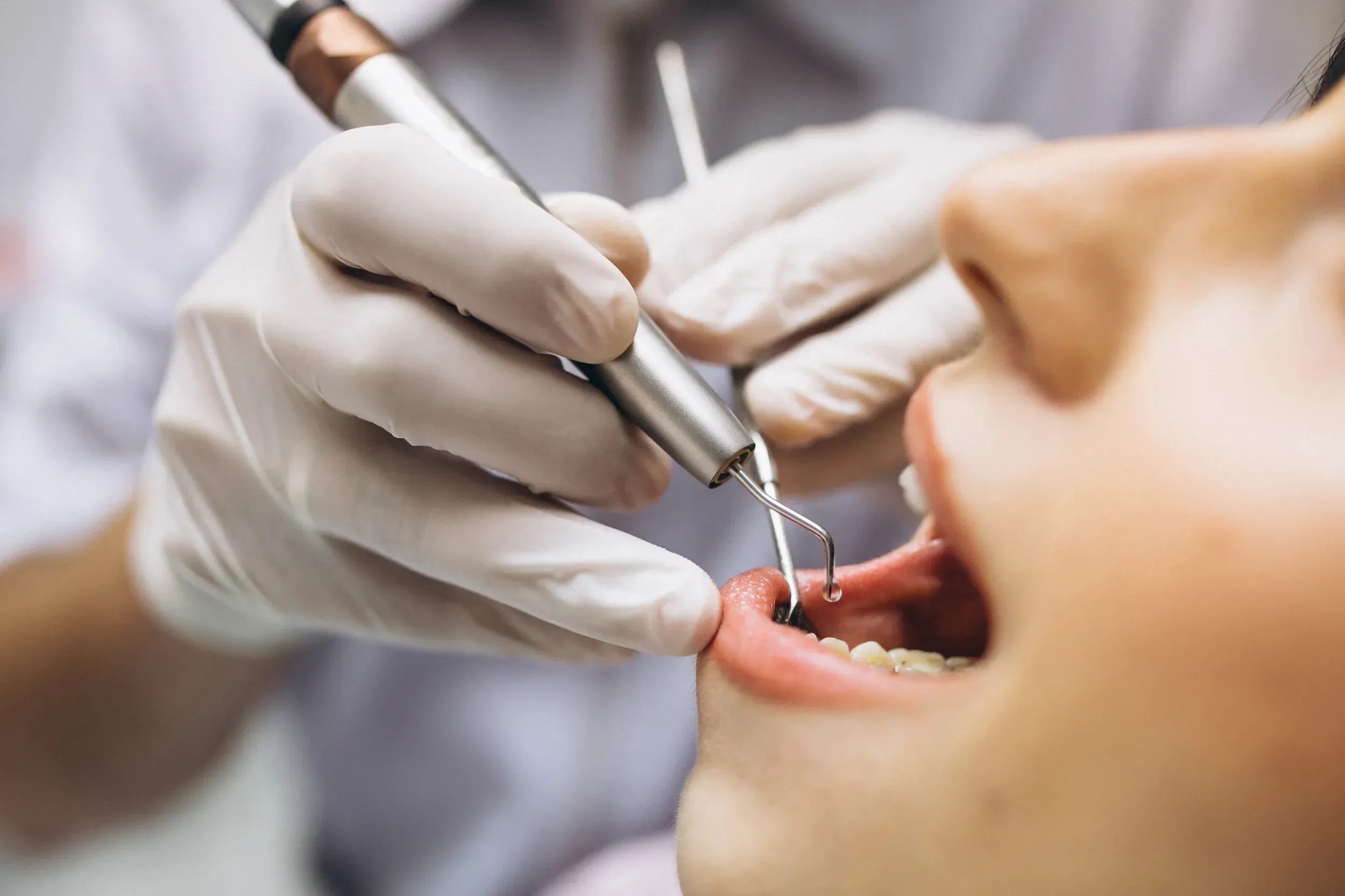
Understanding Tooth Loss
Losing one or more teeth changes more than your smile. You may avoid certain foods, feel self-conscious in photos, or notice that your speech has shifted around the gap. Over time, the jawbone in the empty socket begins to shrink because chewing forces no longer stimulate it, and neighboring teeth start to tilt or drift into the open space. Bridges and dentures hide the visible gap, but they do not stop the bone loss happening underneath, and removable appliances can slip during meals or conversation.
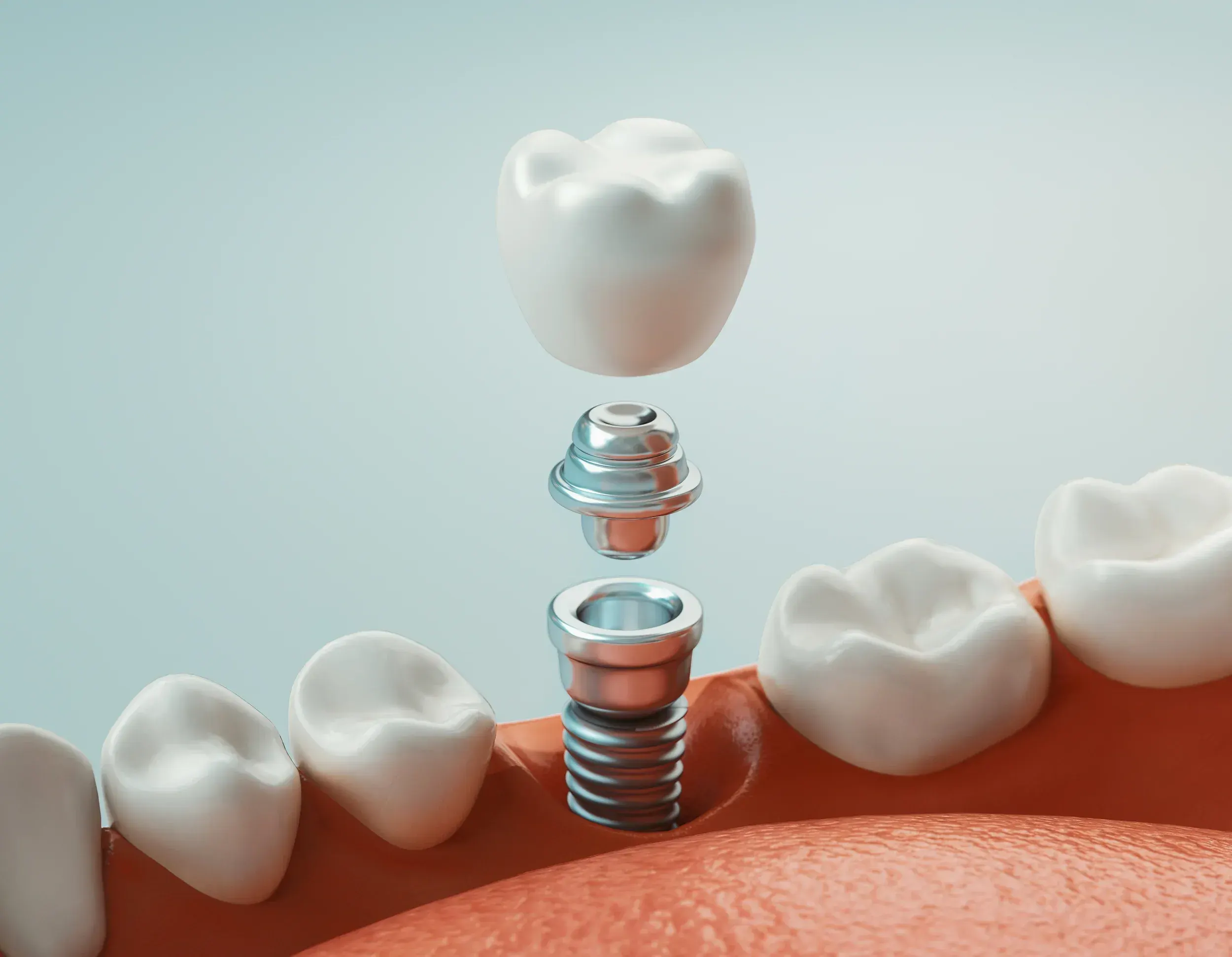
Dental implants restore the missing tooth root, not just the crown above it. The titanium post integrates with your jawbone through a biological process called osseointegration, transferring chewing forces back into the bone exactly the way a natural root would. This preserves bone density, prevents adjacent teeth from shifting, and gives you a replacement tooth that stays firmly in place. Properly placed implants are independent of surrounding teeth and routinely last for decades, often for life.
The Science of Osseointegration
Dental implants are small titanium posts surgically placed into the jawbone to serve as artificial tooth roots. Once healed, they support a custom crown, bridge, or denture and have been used in modern dentistry since the 1960s with documented long-term success.
The implant relies on a biological process called osseointegration, the direct structural and functional connection between living bone and the implant surface. According to the American Dental Association, modern implants have documented success rates of 95 to 98 percent at 10 years, making them one of the most predictable procedures in dentistry.
Your dentist uses 3D digital scanning to plan the precise position, angle, and depth of each implant before surgery. The titanium post is placed gently into the bone, and you return home the same day with simple aftercare instructions.
A healing period of three to six months allows the implant to fuse with the bone. The final crown then attaches to the implant and looks, feels, and functions like a natural tooth, often for the rest of your life with proper care.
Custom crowns match the shape, shade, and contour of your real teeth
Stimulates the jawbone the same way a natural tooth root does
Bite into apples, steak, and corn without slipping or pain
No need to grind down healthy adjacent teeth as with a bridge
Properly cared-for implants routinely last 25 years or for life
Brush and floss exactly as you would natural teeth
Compare Your Options
| Treatment | Mechanism | Time | Results | Duration | Downtime | Best For |
|---|---|---|---|---|---|---|
| Dental Implants | Titanium root in jawbone | 3-6 months total | Permanent fixed tooth | 25+ years to life | 1-2 days per visit | Long-term replacement |
| Dental Bridges | Crowns anchored to neighbors | 2-3 weeks | Fixed non-removable | 10-15 years typical | Minimal | Adjacent teeth need crowns |
| Dentures | Removable acrylic appliance | 4-8 weeks | Removable full or partial | 5-10 years | Minimal | Multiple teeth, budget |
| Partial Dentures | Removable with metal clasps | 3-6 weeks | Removable replacement | 5-10 years | Minimal | Several teeth missing |
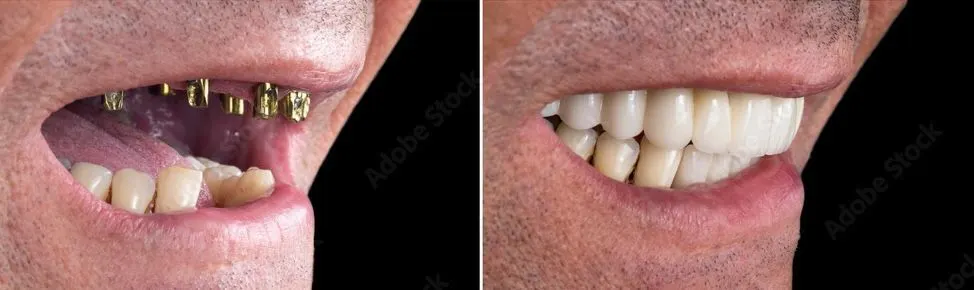
Dental Implants | East Ellijay, GA
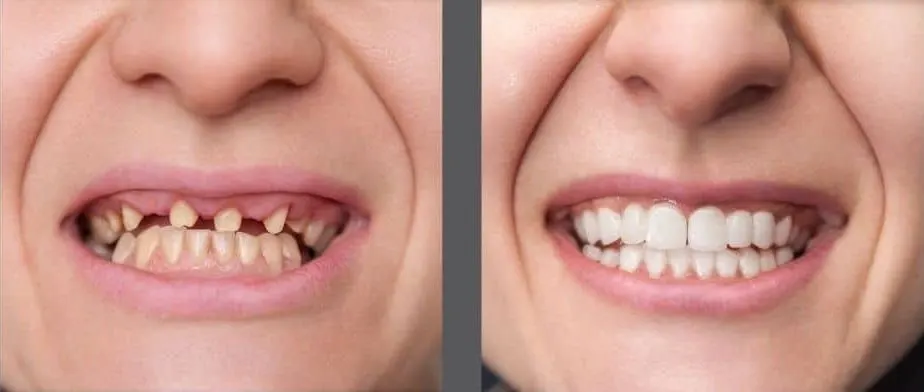
Dental Implants | East Ellijay, GA
Healing progresses steadily across the three to six month osseointegration window. Most patients see normal-looking gum tissue within two to three weeks, and the final implant crown is delivered once the bone has fully fused around the post. Individual results vary based on bone health, healing response, and case complexity.
View All
Finding Your Best Restoration
Most adults missing one or more teeth are candidates for dental implants, provided they have adequate jawbone, healthy gums, and good general health. Your dentist performs a thorough exam and 3D scan to confirm candidacy before recommending implants over alternatives like dental bridges or dentures.
The American Academy of Implant Dentistry notes that bone grafting can often restore candidacy for patients with insufficient bone. Absolute contraindications are rare, and many patients initially told they could not have implants find they are candidates after a thorough evaluation with your dentist.
Your dentist reviews your history and captures a 3D digital scan to plan the implant precisely.
Local anesthesia is applied and sedation options are offered for added comfort during surgery.
Your dentist gently places the titanium post into the jawbone using a guided surgical approach.
Over 3-6 months osseointegration fuses the implant to your bone for a stable foundation.
Once healed, a custom-shaded crown is secured to the implant for a natural-looking finish.
What to Know
Expect mild swelling, bruising, and tenderness at the surgical site that typically resolve within 5 to 7 days. Minor bleeding the first 24 hours is normal, and most patients control discomfort with over-the-counter pain relievers within the first week.
Less common issues include implant failure (roughly 2 to 5 percent of cases over 10 years), peri-implantitis (inflammation around the implant), sinus involvement for upper-jaw implants, and rare nerve irritation that usually resolves on its own. Smoking and uncontrolled diabetes significantly increase complication risk.
Dental implants have been used safely for over 50 years and are considered one of the most predictable procedures in modern dentistry. Dr. Settel's ICOI fellowship-level training and use of 3D 3D digital scanning to map nerves, sinuses, and bone density before surgery further reduce risk by allowing precise, guided placement.
In the East Ellijay and North Georgia market, a single-tooth dental implant (post, abutment, and crown) typically ranges from $3,000 to $5,000. Full-arch implant solutions generally range from $20,000 to $40,000 per arch, depending on the number of implants used and the materials selected. Factors that influence cost include whether bone grafting is required, the type of restoration chosen, and the complexity of the case. Exact pricing will be discussed during your consultation based on your individual treatment plan.
We are in-network with Delta Dental, which often provides partial coverage for the crown portion of an implant restoration. Coverage for the surgical implant placement varies by plan; our team will verify your specific benefits before treatment begins.
We offer multiple financing partners to make implants affordable.
East Ellijay's Trusted Implant Provider
Dr. Settel passed the International College of Oral Implantology fellowship exam
Residency-trained in implant surgery with sedation options for anxious patients
Precision 3D scans map nerves, sinuses, and bone before any surgery
Surgical placement and final crown delivered under one roof for 17 years
Treatments that pair well with dental implants for complete restorative care.
Your Questions Answered
Single-tooth implants in our area typically range from $3,000 to $5,000 and full-arch solutions from $20,000 to $40,000 per arch. CareCredit and Cherry financing are available, and Delta Dental often covers a portion.
Most adults with one or more missing teeth, healthy gums, and adequate bone are candidates. Your dentist uses a 3D scan to confirm candidacy. Smokers and patients with uncontrolled diabetes may need additional steps.
From consultation to final crown, most cases take 3 to 6 months. The implant surgery itself is 60 to 90 minutes per tooth. Most of that time is osseointegration, when the implant fuses with your jawbone.
The procedure is performed under local anesthesia and sedation options are available. Most patients describe post-surgery discomfort as milder than they expected and well controlled with over-the-counter pain relievers.
Yes. Many patients combine implants with teeth whitening or Invisalign for a complete smile makeover. Your dentist will sequence treatments so each one enhances the others.
Brush twice a day, floss daily, and come in for regular cleanings. Implants do not get cavities, but the surrounding gum tissue still needs the same care as natural teeth to prevent peri-implantitis.
The jawbone in the empty socket shrinks over time and neighboring teeth drift into the gap, which can change your bite, alter facial structure, and make future tooth replacement more complex and costly.