Loud Snoring
Quiets nighttime breathing by holding the airway open during sleep

Specialty Dental Services
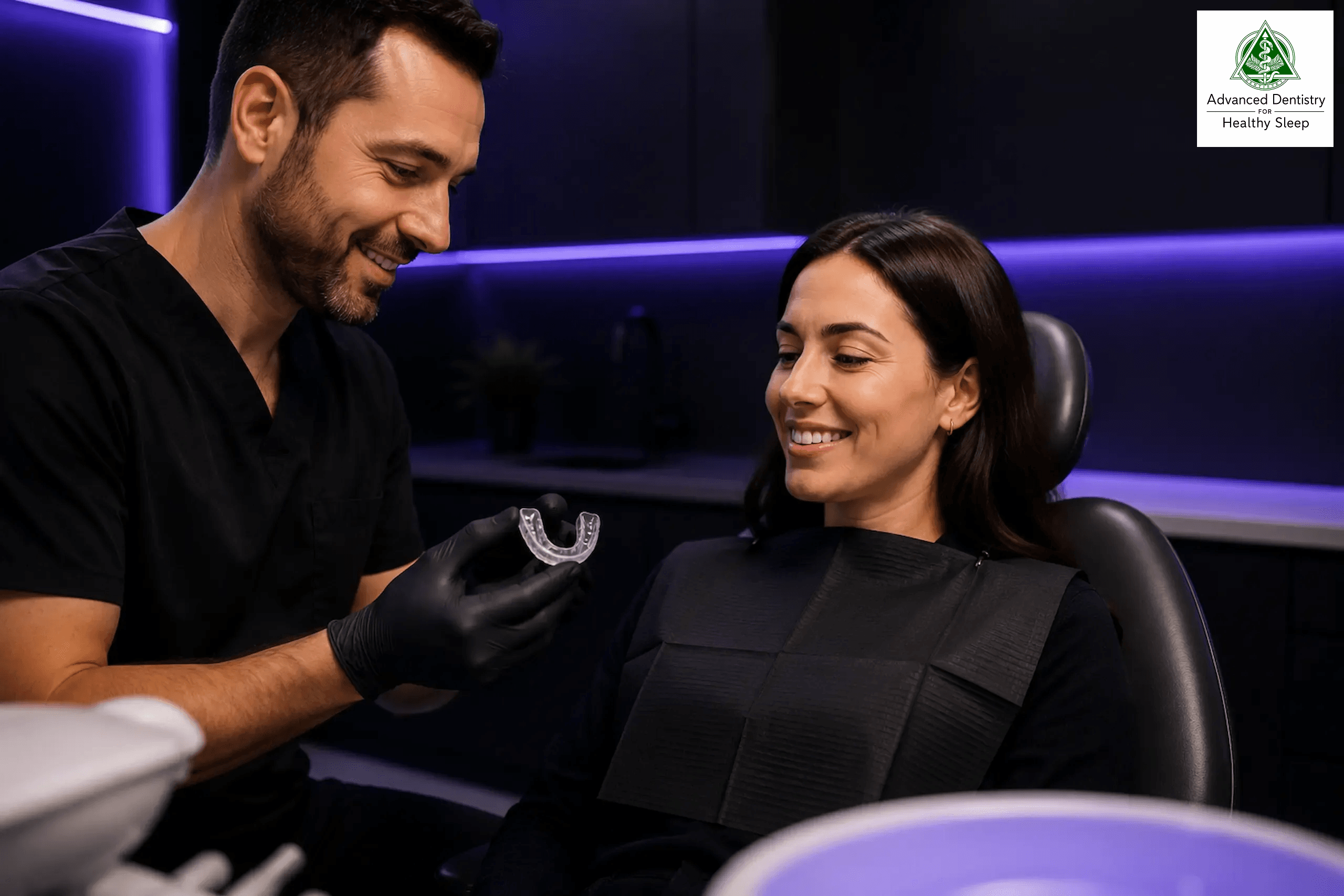
Custom oral devices for better sleep and breathing
Understanding Airway Collapse
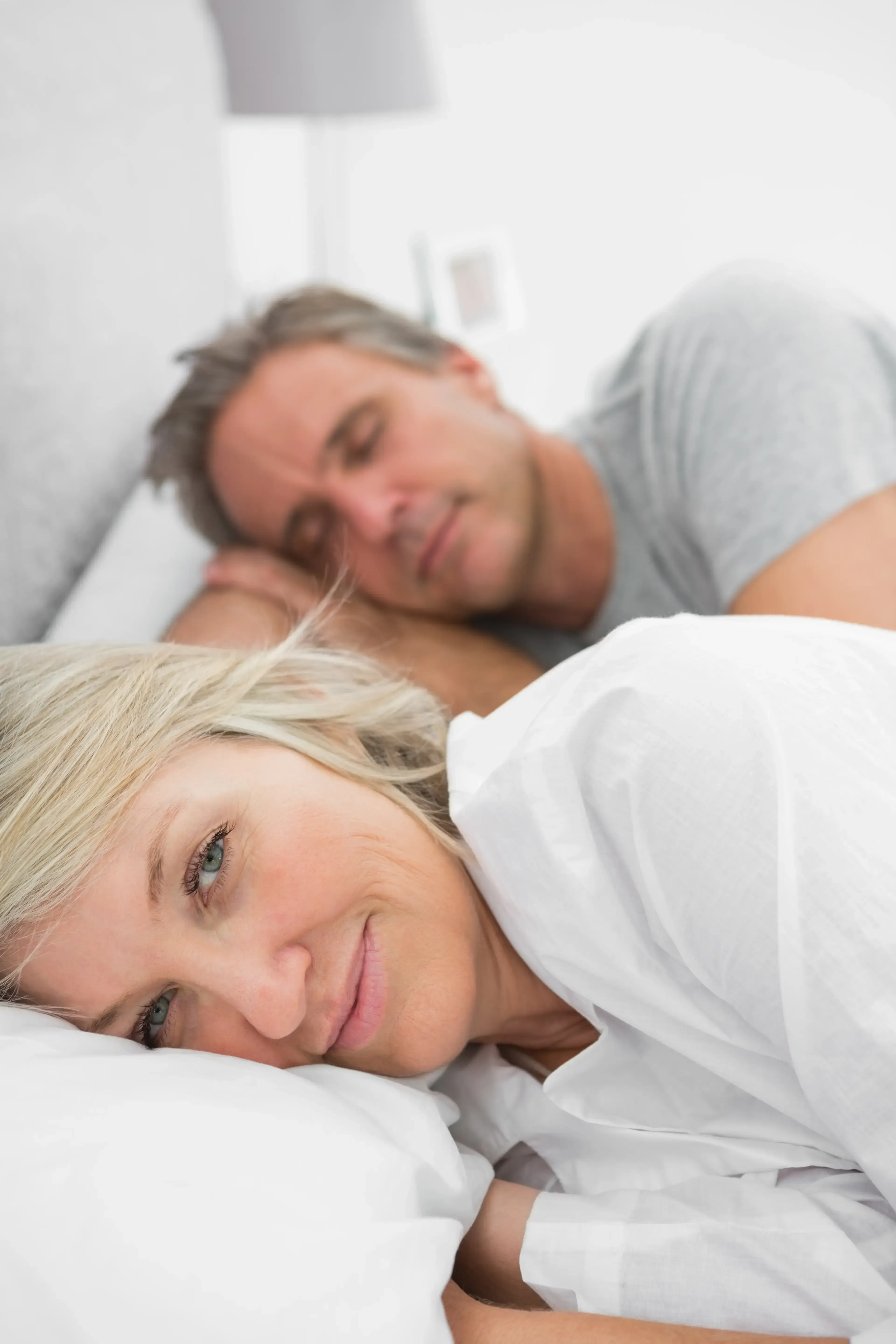
Loud snoring, gasping awake, and dragging through the day are common signs that the airway is narrowing during sleep. Many patients in East Ellijay tell us their partner has moved to another room, or that morning headaches, dry mouth, and brain fog have become routine. Untreated obstructive sleep apnea also strains the heart and raises long-term risks for high blood pressure, stroke, and type 2 diabetes. For patients who cannot tolerate CPAP masks or air pressure, the cycle of poor sleep can feel impossible to break.
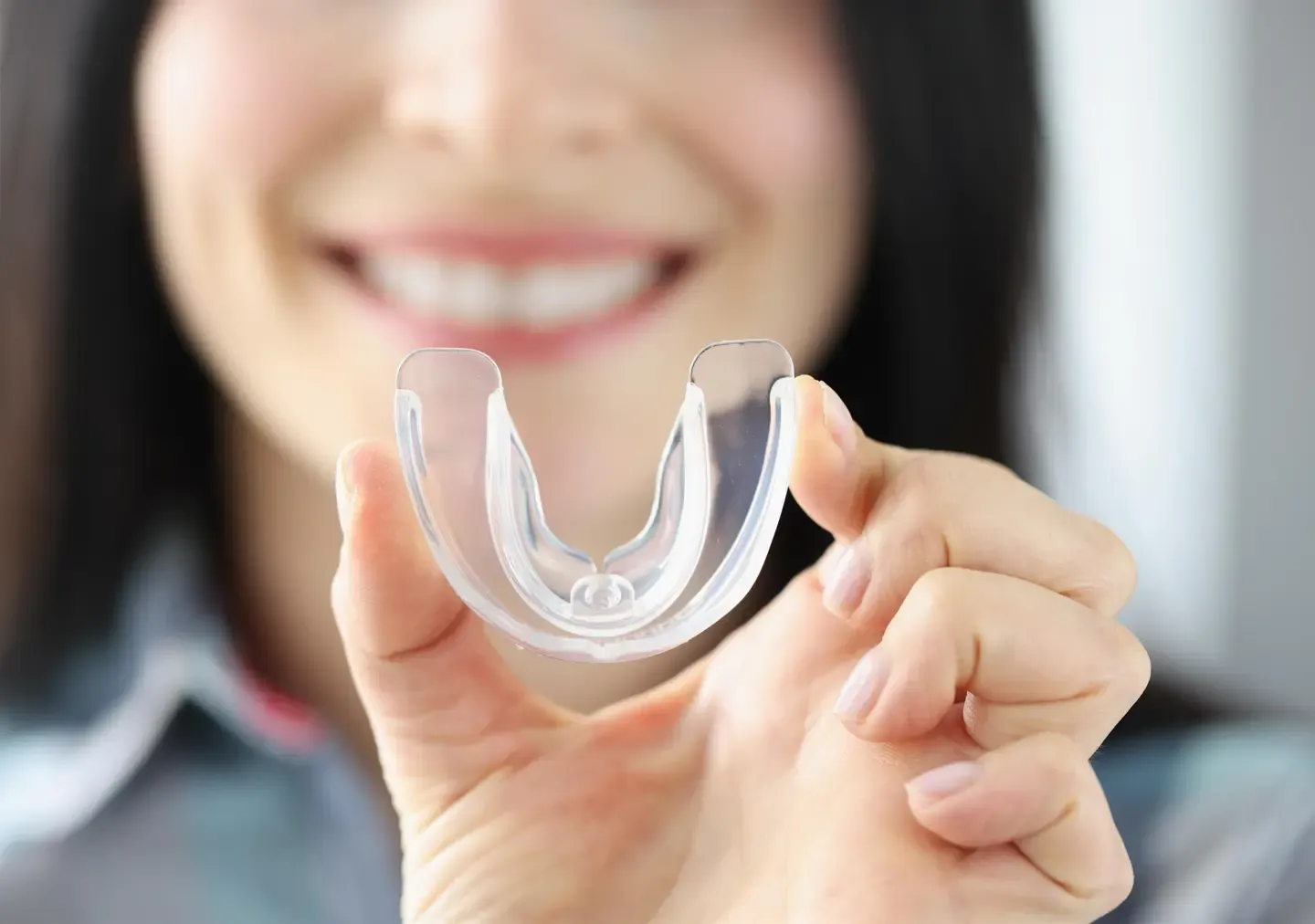
A custom sleep apnea appliance gently repositions the lower jaw or tongue forward during sleep, holding soft tissues away from the back of the throat so air can move freely. Because the device is fabricated from precise digital impressions, it fits comfortably, travels easily, and runs silently with no hoses or electricity. Most patients notice quieter breathing and more restorative sleep within the first few weeks, while their physician monitors progress with follow-up testing to confirm the appliance is controlling the apnea events.
The Science of Airway Support
A sleep apnea appliance is a custom-made oral device, similar in size to a sports mouthguard, worn during sleep to treat snoring and mild to moderate obstructive sleep apnea (OSA). The most common types are mandibular advancement devices (MAD) and tongue retaining devices, both recognized by the American Academy of Dental Sleep Medicine as first-line therapy when CPAP is not tolerated.
A mandibular advancement device gently holds the lower jaw forward, which pulls the tongue and soft tissues away from the back of the throat and keeps the airway open. The American Academy of Sleep Medicine recognizes oral appliance therapy as a primary treatment for adult OSA in patients who prefer it over CPAP or who cannot tolerate positive airway pressure. Multiple randomized trials show meaningful reductions in apnea-hypopnea index (AHI) and improved daytime alertness with consistent nightly wear.
Treatment begins with a physician-ordered sleep study and diagnosis. We then take digital scans of your teeth, fabricate the custom device, and titrate it over several weeks for comfort and effectiveness before a follow-up sleep test confirms results.
Many patients feel quieter, more restorative sleep within the first two to four weeks. A well-maintained appliance typically lasts three to five years before replacement is recommended.
No hoses, masks, or electricity required for a peaceful night
Digitally scanned and adjusted for your unique bite and jaw
Effective option for patients who cannot tolerate positive airway pressure
Patients report improved focus, mood, and energy after consistent use
Simple cleaning routine and discreet storage when not in use
Often covered by medical insurance and Medicare with a sleep study Rx
Compare Your Options
| Treatment | Mechanism | Time | Results | Duration | Downtime | Best For |
|---|---|---|---|---|---|---|
| Sleep Apnea Appliance | Holds jaw forward | 2-3 visits | Quieter sleep | 3-5 years | None | Snoring, mild-moderate OSA |
| Custom Night Guards | Cushions teeth | 2 visits | Protects enamel | 3-5 years | None | Grinding, bruxism |
| Comprehensive Dental Exam | Diagnostic review | 1 visit | Treatment plan | Ongoing | None | Identifying airway and bite issues |
Finding Your Best Night's Sleep
Sleep apnea appliances work best for adults with a confirmed diagnosis of snoring or mild to moderate obstructive sleep apnea who want a comfortable, non-CPAP option. According to the American Academy of Sleep Medicine, oral appliance therapy is appropriate for patients who prefer it to CPAP or who cannot tolerate positive airway pressure.
Treatment requires a physician-ordered sleep study and diagnosis before fabrication. We will refer you to a board-certified sleep physician if you do not already have one, and we coordinate closely with your medical team to confirm the device is controlling your apnea events safely.
Your dentist reviews your sleep study, medical history, bite, and airway concerns together.
Your dentist captures precise 3D digital scans of your teeth and jaw relationship.
A certified dental lab fabricates your custom MAD or tongue retaining device to spec.
Your dentist fits and adjusts the appliance for comfort and proper jaw position.
We fine-tune advancement over several weeks and coordinate a follow-up sleep test.
What to Know
Most side effects are mild and improve as you adjust. Patients commonly report temporary jaw soreness, excess salivation, dry mouth, or minor tooth tenderness during the first 1-2 weeks of nightly wear. These typically resolve as the muscles adapt and the appliance is titrated for comfort.
Long-term wear can occasionally cause small bite changes, shifting of front teeth, or temporomandibular joint discomfort. Studies summarized by the American Academy of Dental Sleep Medicine report that significant bite changes occur in a minority of long-term users and are usually manageable with morning bite exercises and routine follow-up.
A sleep apnea appliance is a prescription medical device and requires a physician's diagnosis based on a sleep study. We coordinate with your sleep physician for follow-up testing to confirm the device is reducing apnea events, and your dentist monitors your bite, jaw joints, and oral health at every visit. Patients with severe OSA, central sleep apnea, or significant cardiopulmonary disease should discuss CPAP and other medical options with their sleep specialist before considering oral appliance therapy.
Custom sleep apnea appliances at East Ellijay Family & Cosmetic Dentistry typically range from $1,500 to $3,000, including digital scans, lab fabrication, fitting, and follow-up titration visits. Cost depends on the type of device (mandibular advancement vs. tongue retaining), complexity of your bite, and the number of titration adjustments needed. Exact pricing will be discussed during your consultation based on your individual treatment plan and your physician's prescription.
Because oral appliance therapy is a medical treatment, it is often eligible for coverage under medical insurance or Medicare, not standard dental insurance. We are now credentialed to bill medical insurance for sleep appliances, several plans are already billable and more are being added. We require a sleep study and a physician's prescription, and our team files documentation directly for medical reimbursement when applicable. Delta Dental in-network status applies to general dental care but not typically to medical sleep devices.
For out-of-pocket costs, we offer several financing solutions to keep treatment accessible.
For combined care, ask our team about pairing your sleep appliance consultation with a comprehensive dental exam to keep your overall oral health on track.
East Ellijay's Trusted Sleep Team
Dr. Settel's 17 years of complex restorative care guide every appliance fit
Drs. Sosebee and Dillard coordinate sleep care alongside Dr. Settel
We pair every device with your sleep physician's diagnosis and follow-up
Serving East Ellijay, Ellijay, Blue Ridge, and Jasper in one trusted office
Your Questions Answered
A sleep apnea appliance is a custom-fit oral device worn during sleep that gently repositions the lower jaw or tongue forward to keep the airway open and reduce snoring and apnea events.
CPAP uses a mask and pressurized air to hold the airway open. An oral appliance is a small, silent, mask-free device that mechanically supports the jaw and tongue, making it easier for many patients to wear consistently.
Custom oral appliances are usually billed to medical insurance or Medicare rather than dental insurance, and coverage often requires a sleep study and physician prescription. Our team helps you navigate the documentation.
Clinical studies show that custom oral appliances significantly reduce snoring and improve AHI for most patients with mild to moderate obstructive sleep apnea, especially those who cannot tolerate CPAP therapy.
Yes. A physician-ordered sleep study and diagnosis are required before fabrication so we can match the right device to your apnea severity and confirm results with follow-up testing.
Some patients combine airway therapy with bite protection. If you currently use night guards for grinding, your dentist can review whether a single appliance can address both concerns or whether separate devices are best.
With nightly wear and routine cleaning, a custom device typically lasts three to five years. We monitor fit at recall visits and recommend replacement when it no longer holds proper jaw position.